
 🔍
🔍In modern architecture, among the variety of façade materials, light-colored limestones hold a prominent place due to certain advantages compared to other natural stone materials: relatively low cost, good compatibility with the surrounding natural landscape, ease of processing that allows for finishing details directly on the construction site, enhanced thermal properties, and plasticity that enables the execution of complex carved profiles without damaging the sharp edges of the detail, etc.
At the same time, this material has a number of characteristics that limit its use in exterior cladding:
Limestones in the Russian Federation
In the territory of the Russian Federation, there are about 15 limestone deposits known, explored for facing stone and sawn stone (wall); about 30 more deposits, explored for rubble stone, building stone, limestone flour, carbonate raw materials for the cement industry, etc. - are sporadically used for the incidental extraction of non-standard sizes for the production of architectural and restoration details.
Limestones in the CIS countries
In the territory of the former Soviet republics, there is also a sufficient number of quarries of light-colored limestones for cladding and facades of buildings.
In the territory of the Republic of Kazakhstan (Mangystau Region), there is a group of large deposits of decorative shell limestone, associated with the Sarmatian sedimentary complex of the Caspian Basin. Among them, the largest is the Zhetybay deposit, which is developed for both wall and facing stone. The color of the limestone is pale pink and light yellow, with a medium to coarse shell structure. Due to its delicate color shades and exotic patterns, Kazakh shell limestone has become a popular facing material almost throughout the entire CIS.
The Republic of Kyrgyzstan has a large deposit of middle Paleogene limestones with shell fragments - the Sary-Tash deposit, located in the southern part of the country at the foothills of the Alai Range. The limestones are characterized by a golden-brown tone and a medium-fine shell structure. They accept a medium-quality polish. Kyrgyz shell limestone has found wide application, mainly within the country (Manas Airport terminal in Bishkek, Osh market, etc.). In Russia, it has been used in cottage suburban construction (Moscow, Yekaterinburg, etc.).
The Republic of Uzbekistan has the Galabin (Chust) limestone deposit, located in the Namangan region. The limestones are characterized by a grayish-white color and a medium-fine grain structure. In some places, traces of marine fauna are clearly visible in the rock. Galabin limestones are mainly used in the architecture of Uzbekistan. In Moscow, the only object clad in this stone is the Embassy of Uzbekistan in Russia on B. Polyanka Street.
Light limestones in foreign countries
In Bulgaria, a large deposit of organic limestones called Vratza is being developed. The stone has a grayish-white, and less often beige color, and a medium-fine grain structure. The stone has relatively high frost resistance with appropriate selection, allowing it to be used in exterior cladding, including in ventilated facades. This material has gained great popularity in its homeland as well as in the former Warsaw Pact countries.
Portugal has significant resources of limestone, predominantly in gray-yellow and beige colors with a medium-grained structure. In Russia and other European countries, Portuguese limestones such as "moka cream," "crema nova," "branco real," "beige solar," "mirabelle," and "malenias" have been used in the construction of office buildings and country cottages (in Warsaw, limestone was used for the facade of the Kopernik hospital, in St. Petersburg - the chapel in Victory Park, etc.). However, it should be noted that not all limestones extracted in Portugal can be used for external cladding of buildings in temperate climate zones due to their low frost resistance. This circumstance requires architects to pay special attention to the choice of material for external cladding.
Egypt ranks first among African countries in terms of carbonate rock resources. Most limestone and shell limestone deposits are concentrated in the Nile Delta and on the Sinai Peninsula; the varieties found here (Galala, Giallo Sahara, Golden Beach, Selevia Light, Perlato Royal, etc.) are characterized by warm shades: beige, golden yellow, gray-pink, light brown, and others. Some limestones can be polished. In Russia, such material has been used as wall stone (for wall construction in low-rise country buildings) and less frequently as a facing material. Some limestones from Egypt contain clay inclusions, which can lead to the rapid deterioration of the stone in the climate of the central part of Russia.
In Germany (Bavaria), a group of quarries is developing a layered deposit of Jurassic limestones over an area of about 50 km², named after the geological age of the stone. The following main groups (grades) of Jurassic stone are distinguished by color shades: beige (Jura Beige), yellow (Jura Gold), dark beige (Jura Noce), gray (Jura Blue), light beige (Jura Cream), light beige with streaks (Jura Travertin), and others. The structure of Jurassic limestones is fine-grained and micro-porous (the diameter of the largest pores does not exceed 5 mm). On the overall color background of the rock, fragments of marine paleofauna (ammonites, belemnites) up to 20 cm in size can be found, forming an exotic pattern in the stone.
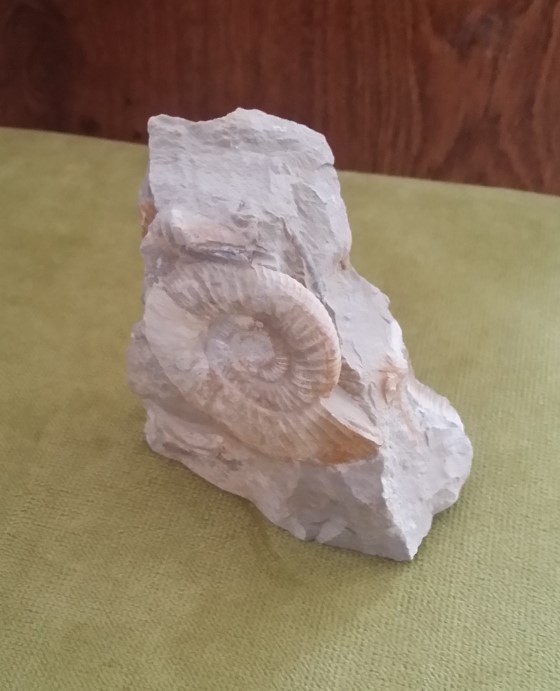 🔍
🔍The preserved ammonite in the mass of Jura Limestone
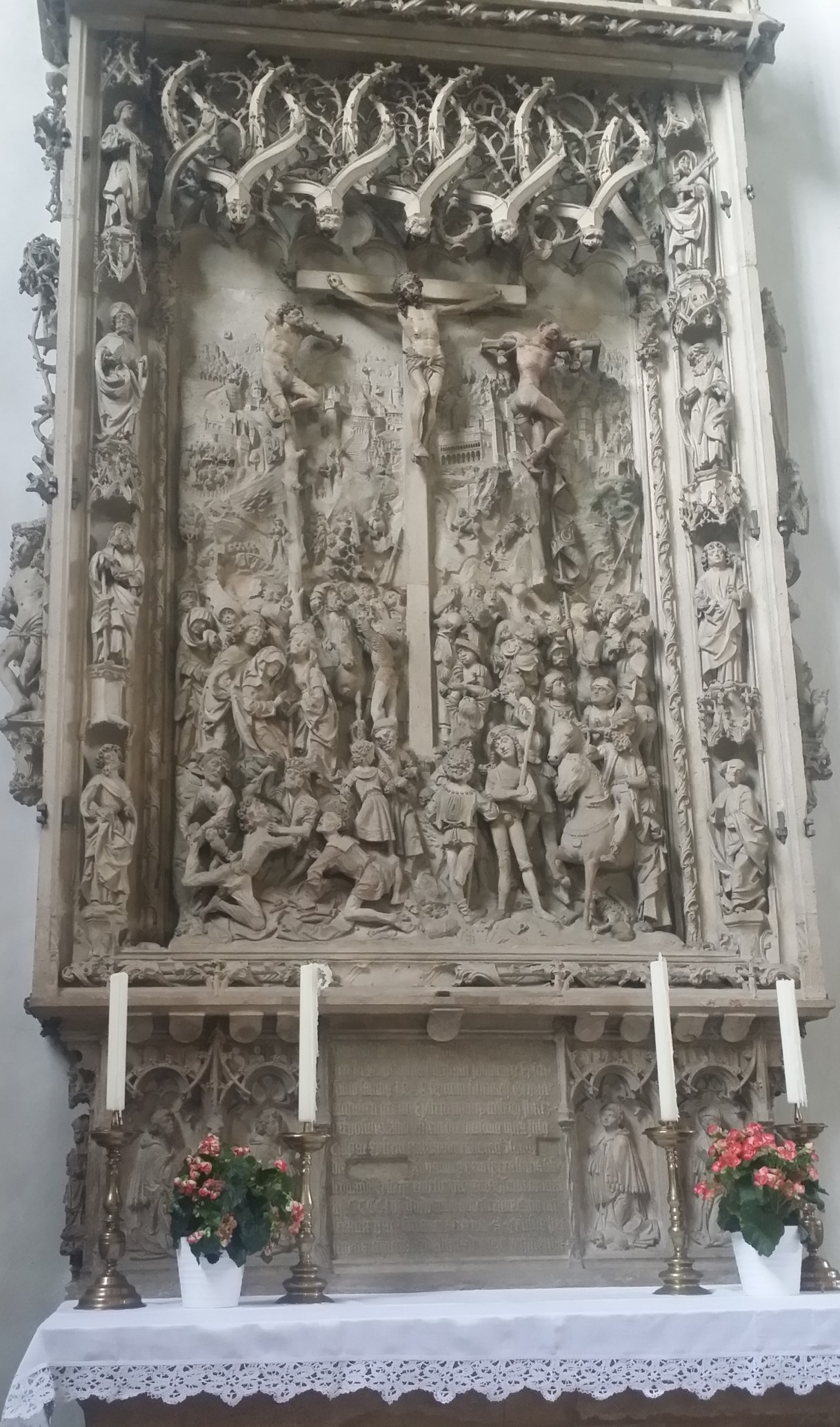 🔍
🔍Engraving carved from stone by an unknown artist made of Jura Limestone in the cathedral of the city of Eichstätt
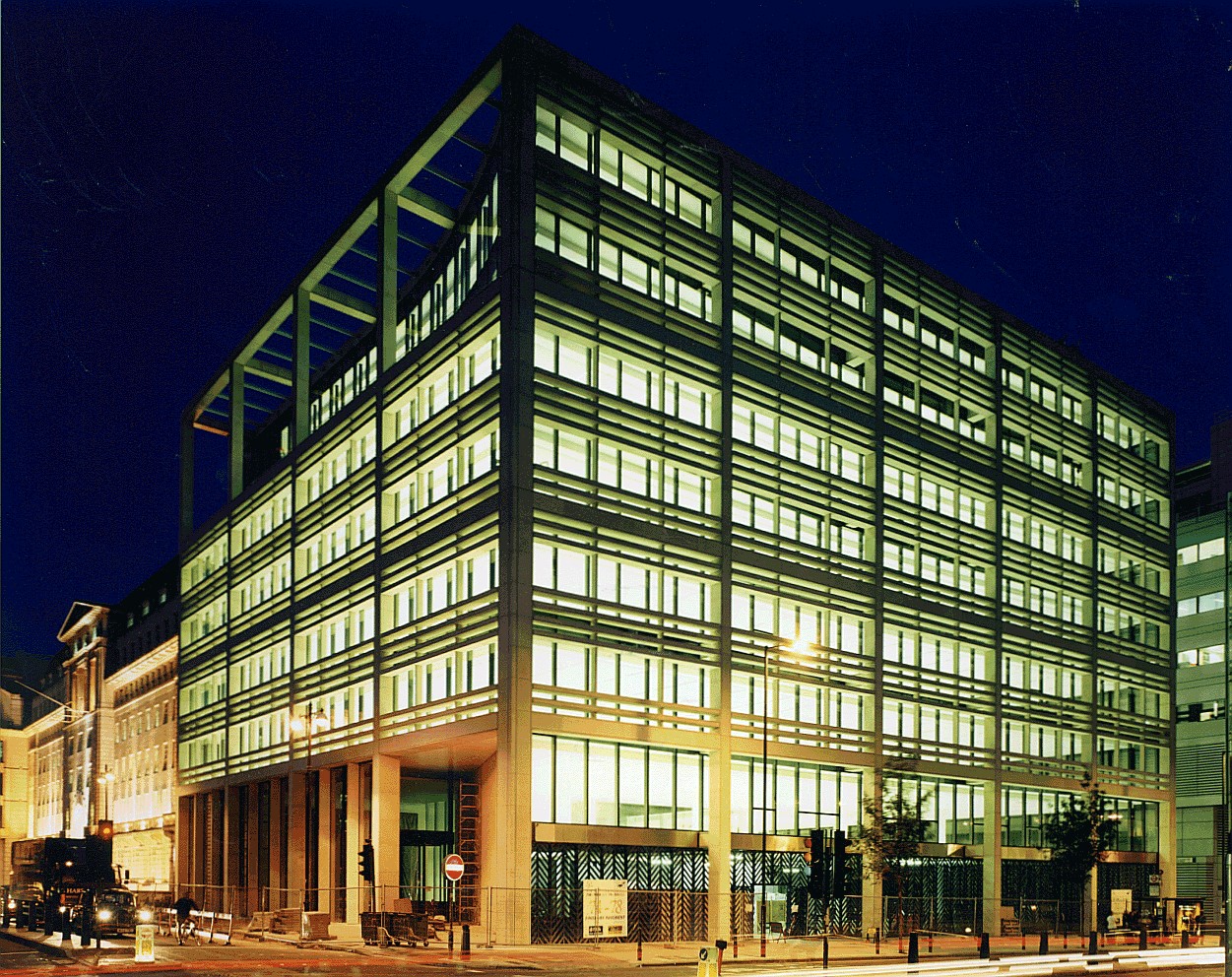 🔍
🔍Finsbury Square England
 🔍
🔍Escala 232, Canada
 🔍
🔍John Wayne Airport, USA
 🔍
🔍A building made of Jura Limestone in China
In Russia, primarily in Moscow and St. Petersburg, Jura Limestone has been used not only in the finishing of country villas but also in the mass cladding of entire urban blocks (for example, the "Golden Mile" block in Moscow, which includes Ostozhenka Street, Butikovsky, Khilkov, Korobeynikov, Zachatyevsky, Pozharsky, and Molokhny alleys).
Currently, the finishing of the facade-plinth of the elite residential complex Residential Complex "Mirozdanie" in Saint Petersburg has been completed.
🔍Residential Complex "Mirozdanie" in Saint Petersburg
The construction of the elite apartments Balchug View Point is also underway on Sadovnicheskaya Embankment, where the main facade of the building is made of Jura Limestone.
 🔍
🔍Balchug View Point on Sadovnicheskaya Embankment
Architects selecting suitable facade materials should remember that certain sections of the Jurassic limestone deposit have low frost resistance, so it is essential to consult with the quarry owners regarding the stone. It is also important to consider the fact that certain layers of Jurassic limestone contain a high amount of pyrite, which will almost certainly lead to rusty efflorescence within the first years of facade operation. Based on the above, it is recommended to primarily consult with the primary source, i.e., the company that owns the quarry, and discuss the necessity of including in the contract the information agreed upon with the architect regarding the specific quarry and the specific layer of material.